神雕侠侣
从凭经验到“慧”种田 广西蔗田里算出产业“甜账本”,从凭经验到“慧”种田 广西蔗田里算出产业“甜账本”_我的网站

A |
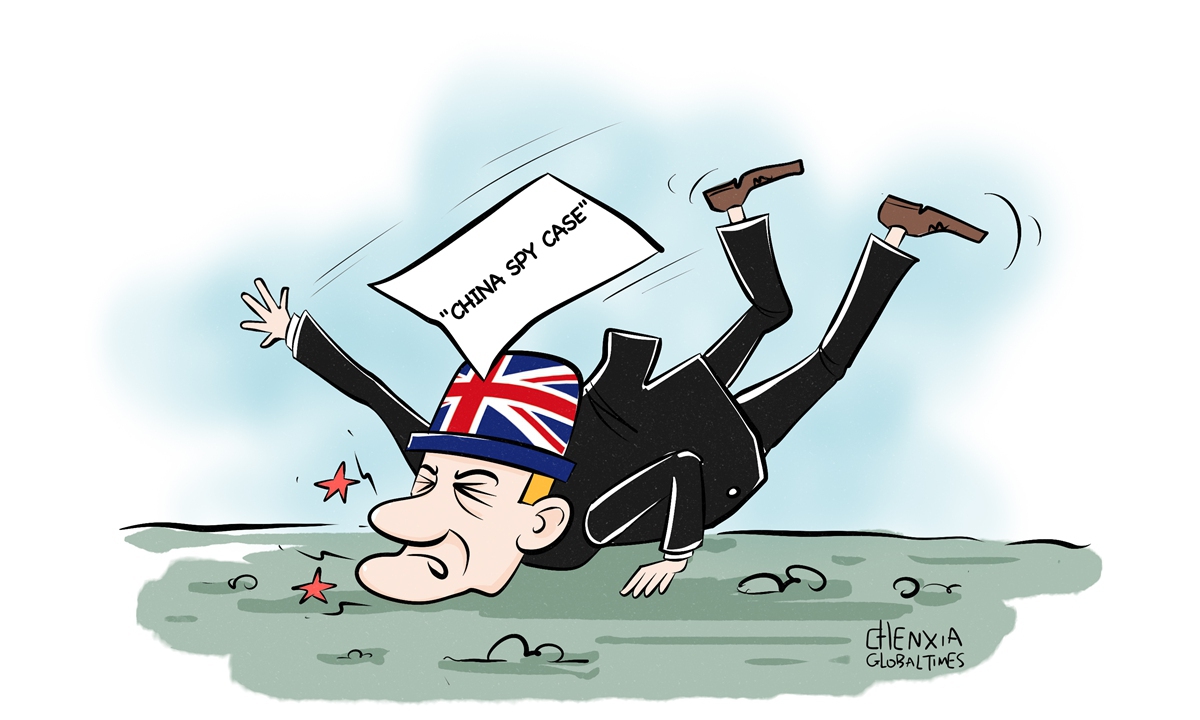
Illustration: Chen Xia/GT
Recent reports from the Telegraph - that a Chinese wind turbine maker previously barred from the UK under national security pretext is seeking to overturn the decision, and that components in Royal Navy drones allegedly transmitted data to China - represent another episode in which some British media and some politicians have amplified the "China threat" narrative. Chinese experts said some British institutions are projecting their own practices onto China and making unsubstantiated claims about the security risks of Chinese equipment, while political pressures, defense priorities and efforts to preserve Britain's strategic relevance are also shaping the debate. They warn that sustained negative rhetoric could gradually erode mutual trust and complicate UK-China relations.
In March, the Labour banned the Chinese wind turbine maker Ming Yang over so-called "national security concerns," thwarting the company's plans to build a factory in the Scottish Highlands. The company is now attempting to persuade the British government to review that position after Andy Burnham's arrival in No 10 and the appointment of Miatta Fahnbulleh as the new Energy Secretary, according to the Telegraph.
The Telegraph report also cited Aman Wang, Ming Yang's UK head, as saying that "the company's proposed factory could create 1,500 direct jobs, with up to 8,000 more in the supply chain." He added: "We are committed to supporting the growth in every postcode that this government wants to see, to re-industrialisation and to lowering energy bills."
The report claimed the wording appeared to be a direct appeal to Prime Minister Andy Burnham, who pledged to deliver "growth in every postcode" in his first major policy speech after taking office. The report also claimed that the company's potential entry into the UK market triggered "alarm bells", with officials from the Ministry of Defense reportedly fretting that it "would create opportunities for spying."
When asked to comment on UK's moves to block plans by Ming Yang Smart Energy to build a wind turbine factory in Scotland on national security grounds, Chinese Foreign Ministry spokesperson Lin Jian said during a press conference on March 26 that China-UK economic, trade and green cooperation is in nature mutually beneficial. Such cooperation should not be viewed as political and security issues.
"It is hoped that the UK will provide a fair, just and non-discriminatory business and investment environment for companies of all countries, including Chinese companies," the spokesperson added.
Ming Yang had not responded to a request for comment from the Global Times as of press time on Monday.
Founded in 1993 and headquartered in Zhongshan, China, Ming Yang Smart Energy is a leading global wind turbine manufacturer and clean energy provider, according to the company's website. The Telegraph previously reported that the company had unveiled plans to build a factory in Scotland to manufacture wind turbine blades for the UK and European markets.
Ming Yang's push for eased restrictions under the new government is a legitimate commercial move. However, certain Conservative-leaning media outlets have used the case to amplify the "China threat" narrative. The case also highlights concerns that the UK has increasingly resorted to so-called national security reviews to restrict Chinese companies and supply chains, Li Guanjie, a research fellow with the Shanghai Academy of Global Governance and Area Studies under the Shanghai International Studies University, told the Global Times.
Prolonged reviews, limited disclosure and the absence of formal rulings can leave firms in regulatory limbo, increasing costs and effectively pushing them out of the market without an explicit ban, said Li.
Also on Sunday, another report from the Telegraph claimed that the cameras on the K3 Scout surveillance drones of the Royal Navy had components made in China which "were secretly transmitting information to a device in the country." The Royal Marines have been using the £12m fleet since March and the Ministry of Defence (MoD) was forced to remove all internet connectivity from the cameras after discovering the breach.
British media coverage of Chinese-made camera components carries distinct Cold War overtones, said Zhang Junshe, a Chinese military affairs expert. He noted that US and UK intelligence agencies have faced allegations of exploiting technical vulnerabilities for intelligence-gathering purposes.
Against this backdrop, Zhang said some Western governments and media are projecting their own historical practices onto China, presuming without evidence that Chinese companies or equipment pose similar risks and repeatedly portraying Chinese technology as a security threat.
Li said some British politicians and government departments may play up national security concerns to bolster the case for higher defense spending, with narrative of China-related threats offering an especially effective way to attract public attention and justify larger budgets.
He added that Burnham is likely to retain the former Starmer administration's framework of "cooperate, compete and challenge" until the next general election amid Britain's constrained national capacity, narrower global ambitions and growing diplomatic focus on Europe. However, continued hyping of China-related security risks may further fuel negative perceptions of China among the British public and business community.
。 广西崇左8月23日电(涂丽莎 陈沿佑)秋日时节,广西崇左市扶绥县渠黎镇甜蜜之光现代甘蔗产业园满目青绿。桂糖44号、云蔗081609、桂糖76号、中糖3号、中辐1号等甘蔗品种长势喜人,大多数蔗株高度超3米。园区采用的多品种轮作、分区种植方式,保障了这片土地长期稳产与生态韧性。8月22日,广西崇左市扶绥县渠黎镇甜蜜之光现代甘蔗产业园。(无人机照片)周圆曦 摄 跟甘蔗打交道已有八年的杨学,从给种植户做技术指导,到创办农业科技公司。这些年,他见证甘蔗种植从靠老经验慢慢变成“科技种田”,心里装着一本清晰的对比账。在他看来,用上甘蔗脱毒种苗及其配套栽培技术,宿根年限能从3年延长到5年左右,出苗率可达95%。“崇左以前种甘蔗一亩大概收4吨,如今搭配新品种、新农艺、新种植模式,亩产提升到了4.8吨。”杨学说道。 针对园区5000亩连片蔗田的管护难题,杨学团队打破传统人工管护模式,把整片蔗田划分成若干可控单元,并使用甘蔗水肥药一体化智能灌溉系统。该系统支持机房操作、手机APP远程调控,可精准设置灌溉时间、流量和水量,一个人就能管护千亩以上蔗田,在减少人工投入的同时也降低人为操作误差。 设备间里,杨学演示并介绍:“系统已升级成AB双管模式,滴水、滴肥、滴药能够同步精准调控。单亩每年电费从80元降到50元;4人一天可以完成600亩施肥作业,以前30人一天都做不到100亩。

B | ” 在采收环节,机械化作业的降本优势同样凸显。

C | 杨学算了一笔账:传统人工砍收、装车,以园区亩产7吨甘蔗、按每吨160元计算,成本超1100元;换成机械化收割,每亩约200元国家机收补贴,连片蔗田农户承担每亩50元至80元机收费,规模越大效益越可观。园区推行蔗叶粉碎还田技术,每亩还可节省三四十元的复合肥支出。图为广西崇左市扶绥县渠黎镇甜蜜之光现代甘蔗产业园种植的甘蔗。陈沿佑 摄 从一株健康种苗到一片高产蔗田,科技创新正在不断重塑甘蔗产业发展模式。近年来,中国热带农业科学院热带生物技术研究所持续面向甘蔗产业发展需求,联动广西农业科学院等科研单位,围绕甘蔗品种改良、种苗繁育、病虫草害综合防控、绿色高效栽培、机械化收获等方向开展关键技术攻关,推动科技成果从实验室走向田间。 “广西是全国甘蔗核心产区,种植面积1200多万亩,产糖量占全国六成以上。”中国热带农业科学院热带生物技术研究所甘蔗中心研究员吴期滨介绍,中国甘蔗栽培技术历经传统经验积累、现代技术奠基、绿色高效智能化转型三个阶段。

D | 眼下业内重点聚焦两大攻关方向:选育适配机械化采收的优质甘蔗品种,研发适配优良品种的专用农机,推动农机与农艺深度融合。
Current article:http://pobianbenmailuntiraoeng.cfd/news/20260826_287990.html
Published on:19:03:49


 10 mn Sri Lankans hit by poverty
 EV制造商Arrival再次裁员并将业务重心从英国转移至美国
 美国向沙特抛橄榄枝,结果沙特提的条件难做到,关键还得看以色列
 Kajol Celebrates 24 Years of Kabhi Khushi Kabhie Gham With Fun Post
 提前9年押注、个人砸下10亿,中国版Moderna背后的神秘科技大佬,提前9年押注、个人砸下10亿,中国版Moderna背后的神秘科技大佬
 广东佛山九江大桥被船舶擦碰,实行临时交通管制